
How to Choose a Tattoo Artist for Your Idea
- Aug 13
- 6 min read
A tattoo is not a product you pull from a shelf. It lives on your skin, changes with your body, and carries the weight of the moment you chose it. Knowing how to choose a tattoo artist is less about finding the nearest available appointment and more about finding the person whose visual language suits the piece you want to wear.
For a tiny symbol, that might be simple. For a large custom piece, a memorial design, or something built from horror, folklore or mythology, the artist matters as much as the original idea. The right fit turns a loose reference folder into a tattoo with purpose. The wrong fit can leave you with something technically fine but creatively flat.
Start with the artist’s actual style
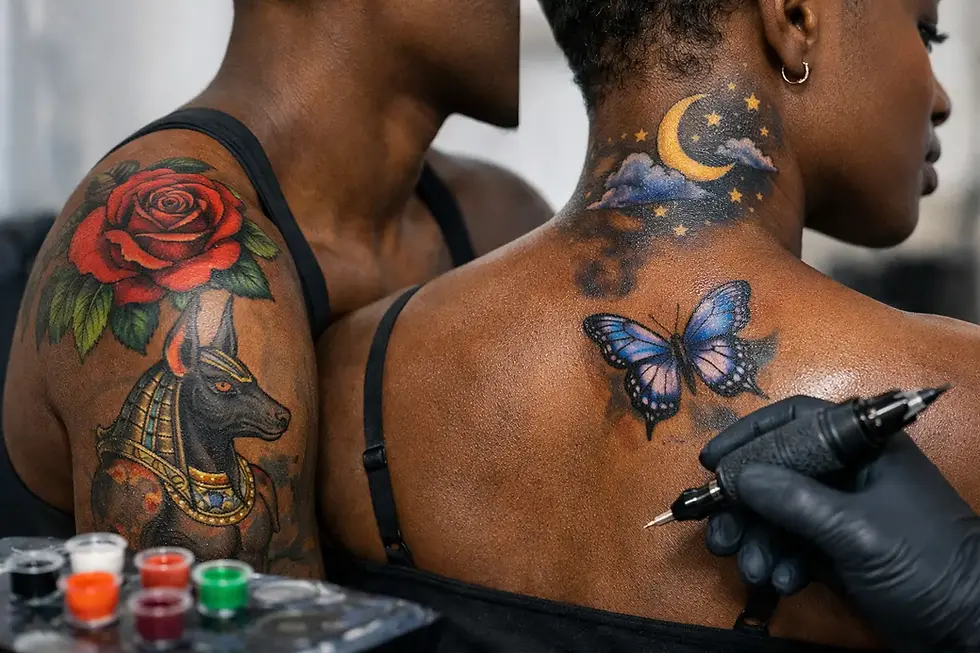
Every good tattoo artist has a point of view. Some excel at delicate fine line work, others specialise in traditional colour, realism, ornamental patterns, blackwork, Japanese-inspired pieces or bold graphic designs. A strong portfolio should feel coherent, even when the subjects change.
Do not choose an artist solely because they tattooed a wolf, skull or dagger that looks like the thing you want. Look at how they tattooed it. Is the linework heavy or fine? Is the shading smooth, stippled, high contrast or deliberately rough? Do their figures feel elegant, grotesque, comic-book sharp or painterly? These choices are their handwriting.
If you want a dark illustrative creature with texture, atmosphere and a slightly unsettling edge, an artist whose portfolio is mostly tiny minimalist florals may not be the right match, however skilled they are. Likewise, asking a gothic blackwork artist for soft pastel watercolour is likely to dilute what makes their work distinctive.
Choosing a specialist is not limiting your idea. It is giving it the best possible chance of becoming more interesting than the reference image you started with.
Look for consistency, not one perfect post
Social media makes it easy to be distracted by a single viral tattoo. Scroll deeper. Look for healed work, different body placements, designs at various scales and photographs taken in ordinary studio lighting. Fresh tattoos can look extremely crisp because the skin is raised, clean and freshly wiped. Healed work tells you more about line quality, saturation and whether the design still reads well once it has settled.
A reliable portfolio should show that the artist can deliver consistently, not just occasionally. Pay attention to whether the images are clear and honest. Heavy filters, extreme contrast and awkward crops can hide a great deal.
How to choose a tattoo artist for custom work
Custom tattooing is a collaboration, not a design service where you direct every line from a Pinterest board. You bring the story, symbols, mood and non-negotiables. The artist brings composition, technical judgement and the ability to turn those fragments into something that works on skin.
A good custom artist will ask questions that go beyond “what size?”. They may want to know where the tattoo is going, whether it connects to existing work, what details matter most, how visible you want it to be, and what feeling you want it to carry. That is not unnecessary admin. It is the groundwork for a design that belongs on your body rather than a generic image dropped onto an arm.
Be wary of anyone promising an exact copy of another artist’s tattoo. References are useful for communicating mood, subject matter and placement, but a custom piece should not be a trace of somebody else’s work. You deserve an original tattoo, and artists deserve respect for their own creative labour.
There is a trade-off here. The more you choose an artist for their signature style, the more room you need to give them to interpret the idea. If total control over every detail matters more than their artistic input, a ready-made flash design or a simpler concept may be a better route. If you want something with a real point of view, choose an artist you trust enough to let them make design decisions.
Check hygiene without making it awkward
Creative style is only half the decision. Tattooing is a skin-breaking procedure, and professional hygiene is non-negotiable. A reputable studio will be clean, organised and open about its process. You should see disposable gloves being changed when needed, single-use needles and cartridges, protected equipment, clean work surfaces and proper aftercare guidance.
You do not need to become an expert in sterilisation to ask sensible questions. A professional artist will not be offended by them. They should be able to explain how they maintain a safe workspace and what you need to do before and after the appointment.
Trust your instincts when you visit or speak to the studio. Does the communication feel clear? Are deposits, booking terms and age requirements explained? Is the artist realistic about what is possible at your chosen size and placement? Professionalism is not sterile or impersonal. It is what gives you the confidence to relax when the needle starts.
Think about placement, scale and ageing
The best tattoo artist for your idea is also someone who understands how tattoos behave over time. Skin moves. Hands, fingers, feet and joints take more wear. Fine details can soften, particularly when crammed into a small area. A design that looks brilliant on a phone screen may need a larger placement, bolder contrast or fewer tiny elements to remain readable years from now.
This is where experienced advice can save a good concept from becoming a muddy one. If an artist suggests simplifying the design or moving it slightly, listen to the reasoning. They may be protecting the tattoo’s future, not dismissing your idea.
That does not mean every tattoo needs to be huge or loud. Small tattoos can be excellent when they are designed for their scale. The point is to match the level of detail to the available skin, rather than forcing a full scene into a space better suited to one strong image.
Budget for the work, not the cheapest price
Tattoo pricing reflects more than the hours the needle is on skin. You are paying for drawing time, experience, equipment, sterile supplies, studio overheads and the artist’s years of practice. For custom work, the thinking before the appointment is part of the work itself.
A budget matters, but choosing purely on price can be an expensive false economy. Cover-ups, laser removal and reworking a tattoo you never loved usually cost more than waiting until you can book the right artist. If your dream piece is large, consider building it in sessions or starting with a design that can grow over time.
Be upfront about your budget when booking. It helps the artist recommend a realistic approach, whether that means adjusting the scale, reducing the complexity or planning the project across multiple appointments.
Read the booking process as part of the experience
An artist does not need to reply within five minutes or write an essay in every message. Tattooing days are busy, and many artists handle enquiries around drawing and appointments. What matters is that their booking information is understandable and that they communicate respectfully.
A clear process often signals a well-run practice: enquiry details, deposit terms, expected waiting times, how designs are handled, cancellation policy and what to bring on the day. Read it before asking questions that have already been answered. It shows respect for the artist’s time and gets your booking moving faster.
When you make your enquiry, include the basics: your idea, preferred placement, approximate size, whether it is your first tattoo, and a few relevant references. Avoid sending fifty images with no explanation. A handful of references plus a sentence about what you like in each one is far more useful.
Choose someone you can trust in the chair
You do not need to become best friends with your tattoo artist, but you should feel heard and safe with them. A tattoo session can be intense, especially for a first piece or a long day under the needle. The right artist sets boundaries, treats you with respect and gives you honest guidance without making you feel foolish for asking questions.
For clients looking for custom dark, gothic or illustrative work, that trust is especially valuable. The strongest pieces often come from personal material: a childhood myth, a favourite monster, a family symbol, a private fear, a strange old book. An artist such as Neef Tattoos can take that raw material and shape it into an original visual statement, but only if the conversation is open from the start.
Your tattoo does not have to please everyone who sees it. It has to feel right when you catch it in the mirror years from now. Choose the artist whose work already makes you feel something, bring them an honest idea, and give the design enough room to become yours.